
Biology
Biology (AQA)
Biology is the study of living things, from the molecules within our cells to the organisms that make up ecosystems! You’ll need to think and work like a real scientist if you choose this A level – you’ll develop your ability to design practical investigations in order to collect and analyse valid data, and improve your understanding of how scientists work.
Studying A-level Biology will give you a broad understanding of the principles that underpin much of this modern and dynamic subject and apply this knowledge to interesting and relevant situations.
Course Content & Assessment
During Year 12 students will cover biological molecules, cells, the ways in which organisms exchange substances with their environment, genetic information, variation and relationships between organisms.
During Year 13 students will cover energy transfers between organisms and the ways in which organisms respond to changes in their internal and external environments. Genetics, populations, evolution and ecosystems will be studied as well as the control of gene expression.
Assessment:
Assessments will comprise 3 written papers. The style of questions will be a mixture of:
- short and long answer questions,
- a comprehension question,
- questions requiring the critical analysis of given experimental data and
- an essay from a choice of two titles.
Teaching
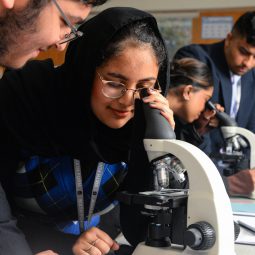
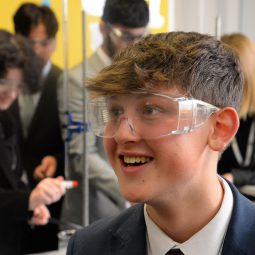
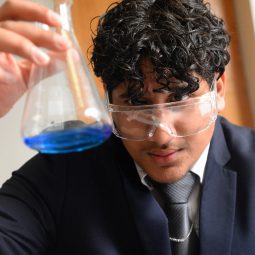
The classes will involve a range of different teaching approaches. Many sessions will focus on practical work and the development of investigative skills. Students working individually and in small groups will work from carefully prepared resources with the help and guidance of their teacher.
Your Future
The weeklong Ecology Fieldtrip takes place in Year 13 and is an integral and exciting part of the A2 course, developing your scientific thinking. The cost for this will be approximately £150.
An A-level in Biology can lead to a vast number of university courses and possible careers. Possible HE courses include, zoology, medicine, pharmacy, biochemistry, dentistry and ecology.
Career opportunities include medicine and related healthcare professions and careers in managing the environment. A word of warning though, many universities will require an A-level in Chemistry as well as Biology.






The Blue Coat Sixth Form is proud to be part of the Cranmer Education Trust
Cranmer Education Trust is a company limited by guarantee and an exempt charity registered in England. Company registration number: 07687709. Registered Office: Cranmer Education Trust, c/o The Blue Coat School, Egerton Street, Oldham OL1 3SQ. The website address is www.cranmereducationtrust.com and the phone number 0161 785 5082.